Long-distance relationships with Asian women are more common - and more successful - than most people assume. A 2025 study by the Center for the Study of Long Distance Relationships found that 3.75 million Americans are currently in an LDR, with international couples accounting for 28% of that number. The distance between New York and Tokyo is 6,740 miles, but with the right tools, habits, and mindset, that gap shrinks to the width of a phone screen.
The real challenge isn't geography. It's the 8-14 hour time zone difference, cultural nuances in communication styles, and the uncertainty of not knowing when you'll next hold her hand. This guide gives you a practical, field-tested framework for making your international relationship thrive - not just survive - across any distance.
Staying Connected Across Time Zones and Cultures
Scheduling Around the Clock
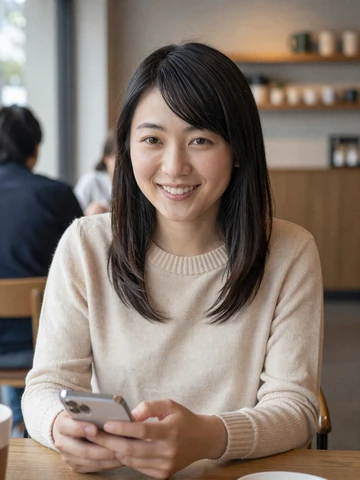
The time difference between the U.S. and most Asian countries ranges from 8 hours (Philippines, when you're on the East Coast) to 14 hours (Japan, from the West Coast). This means when you're starting your morning coffee, she's finishing her evening. Rather than viewing this as an obstacle, successful LDR couples treat overlapping hours as sacred time.
The golden window for most U.S.-Asia couples falls between 7-9 AM EST (8-10 PM in East Asia) and 9-11 PM EST (10 AM-12 PM the next day in East Asia). According to a 2025 eHarmony international dating report, couples who established at least one fixed daily check-in time were 2.3x more likely to report feeling "emotionally secure" in their LDR. If you're dating a Korean woman, keep in mind that Korean couple culture emphasizes frequent "good morning" and "good night" messages - missing these signals can be misinterpreted as disinterest.
Building Daily Rituals That Bridge Distance
The most resilient international couples create micro-rituals that substitute for physical proximity. These aren't grand gestures - they're small, repeatable habits that build emotional infrastructure:
- Morning voice notes: A 30-second voice message sharing your plans for the day feels more intimate than a text. Japanese women particularly appreciate the thoughtfulness of hearing your voice, as verbal communication carries emotional weight in Japanese culture.
- Shared meals over video: Cook the same recipe simultaneously or order from the same cuisine. A 2025 Bumble survey found that 63% of LDR couples who ate "together" via video at least once a week felt more connected.
- Photo diaries: Send 2-3 photos of your daily life - your commute, lunch, a sunset. This creates a visual thread that makes her part of your world despite the distance.
- Watch parties: Stream a K-drama, anime, or movie together using synchronized playback apps. This shared cultural experience is especially powerful when dating Korean or Japanese women who value shared media experiences.
- Language exchange sessions: Dedicate 15 minutes per call to teaching each other phrases. She teaches you Korean; you help her with English idioms. This reciprocity signals long-term investment.
💡 Pro Tip: The 3-2-1 Communication Rule
Here's where it gets interesting: research from Stanford's Virtual Human Interaction Lab (2025) shows that couples who alternate between text, voice, and video communication develop stronger emotional bonds than those who rely on a single medium. Each format engages different emotional channels - text for thoughtful expression, voice for emotional tone, and video for nonverbal intimacy.