Asian Dating vs Western Dating: Key Differences You Should Know

By Asian iDatingZone Team • March 29, 2026 • 7 min read
SSL Secured
1M+ Members
Verified Profiles
24/7 Support
Since 2020

Quick Overview: Two Approaches, One Goal

  • Asian dating generally moves at a slower, more deliberate pace focused on long-term compatibility - while Western dating often prioritizes chemistry and individual connection first.
  • Family approval shapes 78% of relationship decisions in Asia (Pew Research, 2025), compared to roughly 31% in Western cultures, making it the single biggest structural difference.
  • Public displays of affection and emotional expression follow very different timelines - what feels natural after two weeks in the West may take two months or more in many Asian cultures.
  • Cross-cultural couples who actively learn and respect these differences report 34% higher relationship satisfaction than those who expect their partner to adapt entirely (International Journal of Intercultural Relations, 2025).

Asian dating and Western dating share the same goal - finding a meaningful, lasting partnership - but the paths to get there look remarkably different. If you're a Western man exploring connections with Asian women through a dating platform, understanding these cultural contrasts isn't optional - it's the foundation of every successful intercultural relationship. The differences aren't better or worse; they're simply different frameworks shaped by centuries of distinct cultural values.

According to a 2025 Statista survey, 61% of international dating users cited "unexpected cultural differences" as the primary reason their first cross-cultural relationship didn't work out. The men who succeed are those who arrive prepared. Here's your roadmap.

5 Fundamental Differences Between Asian and Western Dating

1. The Pace of Courtship

Western dating culture, particularly in the United States, operates on an accelerated timeline. Exclusivity discussions happen within weeks, physical intimacy often precedes emotional commitment, and the "what are we?" conversation is considered a normal early milestone. Dating apps like Tinder and Hinge have compressed courtship into days rather than months.

Asian dating follows a fundamentally different rhythm. In Japanese dating culture, the relationship doesn't officially begin until kokuhaku - a formal love confession that both parties take seriously. There's no ambiguous "talking stage." Korean dating, meanwhile, celebrates the 100-day anniversary as a major milestone, reflecting how intentionally time is tracked from day one. A 2025 Korea Herald study found that 72% of Korean couples waited at least three months before considering themselves exclusive.

The bottom line: if you're used to Western dating speed, slow down. In Asian cultures, patience isn't passive - it's how you demonstrate sincerity.

2. Family Involvement
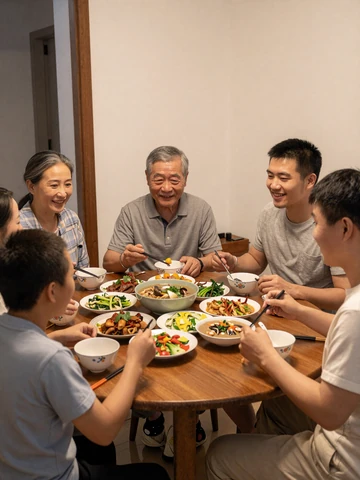
Asian multi-generational family sharing a meal together illustrating family involvement in dating culture

In Western dating, introducing a partner to your parents is a milestone that typically happens after months of exclusivity. Parents may offer opinions, but the final decision rests entirely with the individual. Many Western adults date for years without their parents ever meeting the partner.

In most Asian cultures, family approval isn't a suggestion - it's a prerequisite. A 2025 Pew Research report found that 78% of Asian women consider parental support essential before committing to a relationship. In Indonesian dating, meeting her family might happen within the first month, not as pressure, but as a natural sign of growing trust. In Indian and Pakistani cultures, families may actively evaluate a partner's background, career, and intentions before the relationship progresses.

Here's where it gets interesting: this isn't a barrier - it's an opportunity. When you embrace the family dynamic, you gain not just a partner but an entire support network invested in your relationship's success.

3. Emotional Expression and Communication

Western dating culture values directness. "I love you" might be said within weeks. Emotional vulnerability is encouraged early, and verbal affirmation is a primary love language. Social media announcements ("Instagram official") are considered relationship milestones.

Many Asian cultures express love through actions rather than words. Korean women may show affection through thoughtful gifts and acts of care long before saying "saranghae" (I love you). Japanese couples often communicate devotion through consistency and reliability rather than grand declarations. In Southeast Asian cultures, cooking a meal for someone or caring for their comfort carries more romantic weight than verbal expressions.

Consider this: absence of verbal affirmation doesn't mean absence of love. Learning to read her cultural love language - often expressed through care, presence, and family inclusion - will transform how you experience the relationship.

4. Public Displays of Affection

Holding hands, kissing in public, and physical closeness are normalized in Western dating from early stages. In the U.S. and Europe, couples routinely display affection in restaurants, parks, and social gatherings without social consequence.

In much of Asia, public affection follows a conservative timeline. In Japan, even couples in committed relationships rarely hold hands in public. In Malaysian dating culture, where Islamic values influence social norms, public physical contact may be reserved for private settings entirely. Thai couples are warm and affectionate in private but maintain modesty in public spaces, particularly near temples or elder gatherings.

The real question is: does this change the depth of connection? Not at all. Many intercultural couples report that the slower physical progression creates stronger emotional intimacy - you learn to connect through conversation, shared experiences, and genuine understanding before physical closeness enters the picture.

5. The Path to Commitment and Marriage

Western dating often follows a long, non-linear path: casual dating → exclusivity → cohabitation → engagement → marriage (or indefinite partnership without marriage). According to the U.S. Census Bureau (2025), the average American man marries at 30.5 years, often after multiple serious relationships.

Asian dating cultures generally have a more intentional trajectory. Dating without marriage as an end goal is less common. Women on platforms like Asian iDatingZone are typically looking for partners with clear long-term intentions. In South Asian cultures, discussing marriage early isn't rushing - it's expected. In East Asian cultures, the progression is more measured but still marriage-oriented, with couples evaluating practical compatibility (career, finances, family harmony) alongside romantic chemistry.


📝 Key Insight

The fundamental difference isn't about strictness versus freedom - it's about individual-first versus family-integrated decision-making. Western dating prioritizes the couple's autonomy; Asian dating weaves the relationship into a broader family and community fabric. Neither approach is superior - but understanding which framework your partner operates in prevents 90% of cross-cultural misunderstandings.

Side-by-Side: Asian Dating Culture vs Western Norms

Dating Aspect Typical Western Approach Typical Asian Approach Cross-Cultural Tip
First Date Coffee, drinks, or dinner - casual and one-on-one Group setting, family-adjacent outing, or structured activity Let her choose the format - it signals what she's comfortable with
Who Pays Split bill or alternating is increasingly common Man typically pays, especially early on - seen as respectful Offer to pay without insistence; follow her cultural cues
Physical Affection Timeline Kissing on first or second date is common Physical intimacy develops after emotional trust is established (weeks to months) Match her pace - rushing signals casual intent
Meeting Parents After 6-12 months, often casual Within 1-3 months in many cultures - formal and significant Prepare thoughtfully: dress well, bring gifts, learn basic greetings
Social Media Sharing "Instagram official" is a relationship milestone Many Asian women prefer privacy in early stages Ask before posting - privacy signals respect for her boundaries
Marriage Discussion Typically after 1-3 years of dating May arise within months, especially in South Asian dating Be honest about your timeline - ambiguity erodes trust quickly

How to Navigate Cultural Differences Successfully

Cross-cultural dating doesn't require you to abandon your own values - it requires you to expand your perspective. Tawkify's 2025 research on Asian online dating challenges recommends transitioning to video calls early, explicitly discussing cultural priorities, and planning in-person meetings once trust is established. Here are practical strategies that work.

  1. Lead with curiosity, not assumptions. Ask "what does dating look like in your family?" instead of assuming you know. Every woman's experience is shaped by her specific background, city, and generation - not just her nationality.
  2. Communicate your intentions clearly and early. Asian dating cultures have less tolerance for ambiguity. If you're serious about finding a life partner, say so. Women on Asian dating platforms value transparency over smoothness.
  3. Learn her specific cultural customs. Reading about Japanese dating etiquette or Korean couple culture before your first conversation shows investment. Even small efforts - knowing about omiyage, sogaeting, or wai greetings - create immediate connection.
  4. Embrace the family dynamic. Rather than viewing family involvement as interference, see it as the strongest signal of a healthy, stable culture. Meeting her parents is an honor, not a test.
  5. Adjust your affection style gradually. Let physical and verbal intimacy develop at her pace. According to a 2025 eHarmony study, intercultural couples who respected cultural pacing were 2.7x more likely to reach the one-year mark.
  6. Avoid the comparison trap. Saying "where I'm from, we do it this way" creates distance. Instead, try "I'd love to understand how your family approaches this" - it invites sharing rather than defending.

"The couples who thrive across cultures are those who stop keeping score of whose way is 'right' and start building a third culture - one that belongs to both of them."

- Dr. Helen Chen, Intercultural Relationship Specialist, Stanford University, 2025

Real Scenarios: When Cultures Meet in Dating

Understanding theory is helpful - but seeing these differences play out in real situations makes them actionable. Here are three common scenarios that cross-cultural couples encounter.

The "Too Fast" Misunderstanding

Situation: Mark, 38, from Chicago matched with Yuki, 29, from Osaka on Asian iDatingZone. After two weeks of daily messaging, he told her he was falling in love. She pulled back and stopped responding for three days.

Cultural context: In Japanese dating culture, emotional declarations carry enormous weight. Yuki wasn't uninterested - she was processing whether he truly meant it or was being casually expressive.

Resolution: Mark sent a thoughtful message acknowledging he may have moved too fast by her standards and that he respected her pace. Yuki responded warmly and they continued building their connection - eventually meeting in Kyoto six months later.

The Family Dinner Surprise

Situation: David, 42, from Texas planned a casual first meeting with Rina, 31, from Jakarta during his business trip to Indonesia. He arrived at the restaurant to find Rina accompanied by her mother, aunt, and younger sister.

Cultural context: In Indonesian culture, bringing family to meet a potential partner is a sign of genuine interest, not distrust. Rina was showing David she took him seriously enough to introduce him to her support system.

Resolution: David embraced the moment, asked her mother about her favorite Javanese dishes, and brought a small gift box of Texas chocolates. The family approved, and David and Rina are now planning their 2026 wedding.

The Affection Disconnect

Situation: Ryan, 35, from London was dating Mei Ling, 27, from Kuala Lumpur. After a month together, he felt frustrated that she never held his hand in public or posted about their relationship on social media.

Cultural context: In Malaysian dating culture, modesty in public - especially in Malay Muslim communities - is a sign of respect, not emotional distance. Mei Ling expressed her affection through home-cooked meals, thoughtful texts, and introducing Ryan to her closest friends.

Resolution: Once Ryan understood that her love language was acts of service rather than public affection, he stopped measuring the relationship by Western standards and started appreciating what she was showing him every day.

Experience the Difference - Meet Asian Women Today

Haruka, 27, Japanese woman from Tokyo with warm smile in modern cafe setting Verified

Haruka Tanabe

27 y.o. Tokyo

Soyeon, 30, Korean woman from Seoul at rooftop cafe with city views Verified

Soyeon Park

30 y.o. Seoul

Putri, 26, Indonesian woman from Jakarta in tropical garden setting Verified

Putri Wulandari

26 y.o. Jakarta

Aisyah, 28, Malaysian woman from Kuala Lumpur in elegant modern setting Verified

Aisyah Lim

28 y.o. Kuala Lumpur

Mika, 25, Japanese woman from Osaka on a warm evening street with lanterns Verified

Mika Fujimoto

25 y.o. Osaka

Eunji, 31, Korean woman from Busan at seaside cafe with ocean backdrop Verified

Eunji Kim

31 y.o. Busan

Dewi, 29, Indonesian woman from Bali near temple garden in coral sundress Verified

Dewi Anggraini

29 y.o. Bali

Nurul, 27, Malaysian woman from Penang on colorful heritage street Verified

Nurul Hassan

27 y.o. Penang

Questions About Cross-Cultural Dating Answered

Bridge the Gap - Create Your Free Profile

Understanding is the first step - meet verified Asian women who are ready for meaningful cross-cultural connections.

Free registration - no credit card required